Most people have probably come across the lunar calendar at some point. Some have been using it in everyday life for years. Others may remember their grandparents cutting out newspaper articles and tips about the phases of the Moon and pasting them into notebooks filled with useful advice. Some first heard about it through an interest in astrology, history, or folk traditions. Others may only know the term vaguely, without ever really looking into what it means.
There was even a time when girls who wanted to grow their hair long were advised to have it trimmed during the waxing Moon. One way or another, the lunar calendar is something many generations have heard about, even if they did not always fully understand how it works or why it has remained so popular.
In fact, the lunar calendar is one of the oldest ways of keeping track of time. That is easy to understand: people could observe the phases of the Moon with the naked eye long before precise instruments and modern calendar systems existed. The Moon was a visible point of reference in the night sky, helping people follow the passing of days and gradually becoming part of the earliest ideas about time.
How the lunar cycle works
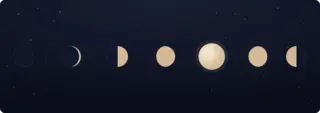
From an astronomical point of view, the lunar cycle lasts about 29.5 Earth days on average. That is the time from one new moon to the next. During this period, the Moon passes through several phases, though in everyday calendar terms people usually focus on four main ones: the new moon, the first quarter, the full moon, and the last quarter.
In simple terms, a lunar day is often understood as the time from one moonrise to the next. It is slightly longer than a solar day, which is why the Moon rises later each day than it did the day before.
It is also worth remembering that the Moon is not visible only at night. Sometimes it can be seen clearly during the day as well. Many people have probably noticed the Sun and the Moon in the sky at the same time at least once.
Why the lunar calendar is no longer the main calendar
Even though the lunar calendar is one of the oldest, the Gregorian calendar eventually became the main calendar in the modern world. It is the system used in most countries as the international standard. It is based on the Earth's yearly orbit around the Sun, and its year count begins with the birth of Christ.
That said, lunar and lunisolar calendar systems have not disappeared completely. In some cultures and religious traditions, they still play an important role. But in everyday life across most of the world, the lunar calendar has long since stopped being the main way of tracking time. Instead, it has remained in a different role - as part of tradition, folk observation, everyday advice, and, of course, gardening.
Why gardeners use the lunar calendar
Gardening is where the lunar calendar is most often used today. For many people, it is not a strict rulebook but a handy guide that helps them plan work in the garden and vegetable patch. People look at it when deciding the best time to sow, replant, prune, weed, or harvest.
Why is the lunar calendar so closely linked to plants? Its roots go back to ancient farming traditions. For centuries, people observed nature - the phases of the Moon, the weather, the changing seasons, soil moisture, plant growth, and crop yields. Over time, these observations began to be linked to certain days in the lunar cycle. That is how folk advice, traditional signs, farming calendars, and almanacs appeared.
Later, interest in these ideas developed further in biodynamic agriculture, where lunar and natural rhythms are given special attention. In such systems, days may be divided into root days, leaf days, flower days, and fruit days, depending on which crops are believed to respond best at those times.
How to use the lunar calendar in the garden
Today, the lunar calendar remains popular with gardeners mainly because it makes seasonal work easier to plan. It points to days that are traditionally considered more suitable for sowing, replanting, caring for plants, or harvesting. Some people connect this with the effect of the Moon's phases on plant development, while others see the calendar more as a long-standing tradition and a simple way to organize work in the garden.
At the same time, it is important to understand that the lunar calendar is usually used as a guide, not as the only basis for making decisions. For gardeners, real conditions still matter more: the weather, air and soil temperature, moisture levels, the region, the condition of the plants, and the needs of a particular crop.
Main recommendations based on the phases of the Moon
Most recommendations in the lunar calendar are built around the phases of the Moon. During the waxing Moon, people usually recommend planting crops whose above-ground growth matters most: greens, flowers, vegetables, and fruiting plants. During the waning Moon, more attention is given to root vegetables, onions, garlic, and potatoes, as well as pruning, weeding, and pest control.
On the days of the new moon and the full moon, people often advise disturbing plants as little as possible - not replanting them, not pruning them, and not doing major sowing work. This is not a strict scientific law, but a traditional recommendation that many gardeners use as a guide when planning their work.
Why this tradition has not disappeared
What makes this especially interesting is that the lunar calendar for gardeners is a very old tradition, yet it has not disappeared. In recent years, there has even been renewed interest in activities that used to be associated more with parents and grandparents: houseplants, growing herbs and greens, small kitchen gardens, sewing, knitting, and other quiet hands-on hobbies.
Of course, for many people today, gardening is no longer a necessity, but rather a pleasant hobby - a way to slow down, work with something living, and enjoy the process. Perhaps that is exactly why the lunar calendar has not lost its appeal. It brings together practicality, tradition, and a bit of that familiar homegrown wisdom passed down from one generation to the next.
Interesting facts about the lunar calendar
The lunar calendar is also linked to all kinds of everyday observations. For example, it is used not only by gardeners, but also by people who choose certain days for haircuts or other daily activities.
Different professions have their own observations about the phases of the Moon as well. Sometimes you hear the old saying that full-moon shifts tend to be less calm. Scientifically, claims like that should be treated with caution, but as part of everyday experience they show just how deeply the Moon has entered culture and daily life.
Another interesting example is the tradition of almanacs. Farmers' Almanac, for instance, says that its print editions have included a planting calendar based on the phases and position of the Moon for more than 200 years. In biodynamic agriculture, an even more detailed system appeared, where days may be divided into root, leaf, flower, and fruit days. Lunar and biodynamic calendars are used not only by some gardeners, but also by supporters of biodynamic winemaking.
The lunar calendar on our website
On our website, you will find a convenient section with a lunar calendar for gardeners. There, you can choose the type of plants you are interested in and open a detailed calendar showing favorable days for different kinds of work. When you select a specific day, more detailed information becomes available: whether it is a good time for sowing, replanting, weeding, plant care, or harvesting.
You can choose the type of crop that suits your needs: root crops, leafy crops, fruiting crops, berry bushes, or flowering plants. After that, the calendar will show tips and recommendations specifically for the category you selected. This format makes seasonal gardening tasks easier to navigate and helps you use the lunar calendar not as a complicated system, but as a clear and convenient tool for the garden and vegetable patch.